

Have you ever had the “warm and fuzzies”?
We all know giving back is good. But not just because it feels that way. It’s science!
Home-grown happiness research
Dr. Lara Aknin is an assistant professor of psychology at Simon Fraser University and a principle investigator in SFU’s Helping and Happiness lab. Dr. Aknin studies “prosocial behaviour” – the good things we do for others, and the impact these actions can have.

Dr. Lara Aknin (right) is becoming a leading local expert in happiness and giving to others. Image credit: SFU.
Dr. Aknin just published her latest findings as part of the 2019 World Happiness Report, along with co-authors Dr. Elizabeth Dunn from the University of British Columbia, and Drs. Ashley Whillans and Michael Norton of Harvard Business School.
The team of researchers reviewed dozens of other studies and experiments, drawing wider conclusions about the connections between volunteering, donating money, and happiness.
Time is a precious gift
While Dr. Aknin and her co-authors did not find strong evidence to indicate volunteering causes or improves happiness, the reviewers noted there is a clear correlation between helping others and good quality of life.
“Indeed, research has documented a robust link between volunteering and greater life satisfaction, positive affect, and reduced depression,” the report reads. “Adult volunteers scored significantly higher on quality of life measures, compared to non-volunteers.”
It seems almost half of Canadians enjoy this happier state of being. In 2013, four in 10 Canadians volunteered their time, energy and skills to their communities. These altruists served on non-profit boards and committees, raised money, visited seniors, advocated for causes they care about, and coached amateur sports teams.
That’s a lot of local love!
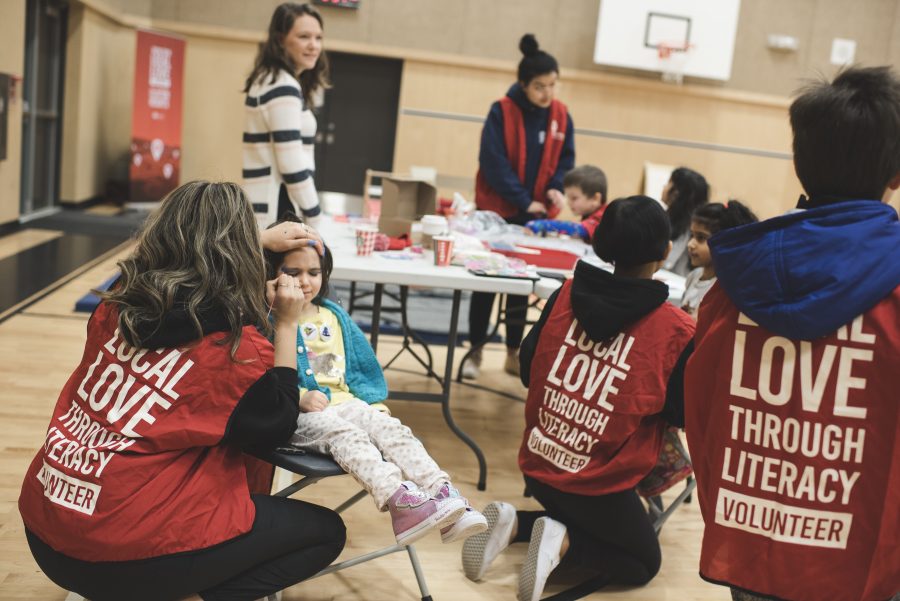
United Way volunteers create healthy, caring, inclusive communities.
At United Way, we see the creative ways you share your time and talent, every day.
- Our dedicated Employee Campaign Chairs and Campaign Cabinet generate millions of dollars in donations for our community, every year.
- GenNexters are inspiring and engaging the next generation of local philanthropists to give back, however they can.
- Our corporate partners are engaging in innovative new Days of Caring, like reading to local kids and families in mobile Literacy Tents.
- Citizens are giving back in their own neighbourhoods, like the Little Library stewards in areas like Clayton Heights and Coquitlam River.
For all of this and more: Thank you!
These individual acts add up, locally and globally.
For instance, the United Nations Sustainable Development Goals (SDGs) are targets for global development adopted in 2015, to be achieved by 2030. All countries of the world support them. Many of the Sustainable Development Goals call for long-term attitude and behaviour changes. According to the United Nations, volunteers advance the SDGs by raising awareness or championing those changes, and inspiring others in the process.
The takeaway? Every day volunteers are transforming our communities… and the world!
Donations make a difference, in more ways than one
In their comprehensive review for the 2019 World Happiness Report, Dr. Aknin and her colleagues also found convincing evidence that increased happiness can come from “generous spending”, or spending for the good of others.
“Our findings demonstrate a pretty consistent causal link between generous spending and happiness,” says Aknin. “This emerges among adults, young children, in rich or poor countries, and even among ex-offender populations.”
No matter who you are, or what experiences you’ve had, clearly giving is a joy-booster.

United Way supporters find creative and energizing ways to give, like these participants in the 2018 Tech Grind, a peer-to-peer fundraiser and race up Grouse Mountain.
Once again, Canadians shine when it comes to giving back.
According to Statistic Canada in 2010, 94% of Canadians gave something to someone in need, whether it was goods, food, or a financial gift. That’s almost all of us, coast to coast! Equally impressive, 84% of us made a charitable donation. British Columbians also give the most to charity in dollars, with annual contributions averaging $543.
If every dollar donated represents a life changed, we have much to be proud of here in B.C.
Better to give than to receive
So volunteers are generally happier people, and donors derive happiness from the act of giving. But how does this compare to when we take “me time”, or make a selfish splurge?
While we all deserve to treat ourselves from time to time, the science is clear: giving to others is a happier experience.
“The literature shows that spending money on others leads to greater happiness than spending on yourself,” says Dr. Aknin.
“It’s not just that happier people are more likely to do generous things,” add Dr. Aknin, describing her own study on prosocial spending, to Global News in 2014.
“When people do generous things, it makes them happier than when we get them to do selfish or self-beneficial things.”
That’s the good news.
The great news is, generosity has no minimum threshold.

A United Way Campaign Associate hands out “Acts of Local Love” cards in downtown Vancouver.The 31-card deck challenges people to carry out a small act of a local love.
“Even small acts of generosity… seem to have these emotional benefits,” says Dr. Aknin.
To all of you who give your time, treasure and talent to your community, with United Way: thank you!
And to anyone looking to take the first step, take heed: just start small, and watch your local love grow.
Time to spare? Check out the volunteer opportunities currently open with United Way British Columbia!
Topics : Volunteers

