


Among those 65-69, 81% use the internet, and half of Canadians over 80 are online. COVID-19 is likely pushing those numbers higher. Photo credit: Adam Nieścioruk/Unsplash
COVID-19 has dramatically changed how seniors go about their daily lives. It’s also changing how United Way partner agencies and those delivering services to seniors work too.
“As difficult as COVID-19 has been for all of us, we are witnessing the resilience of seniors and the creativity of the community-based seniors sector shine in so many ways. Older adults are often criticized for not embracing technology. Our recent experience through COVID-19 has shown us quite the opposite,” says Kahir Lalji, Provincial Director of Population Health at United Way British Columbia.
“We’ve seen a significant uptake in virtual visits of all kinds, social activities and online grocery shopping to name a few.”
A seniors centre without walls
The Seniors’ Centre Without Walls program, an initiative under the Surrey Intercultural Seniors Social Inclusion Partnership (SISSIP) Network Project is a great example. Offered through United Way Better at Home partner agency, Seniors Come Share Society, older adults meet up with others from the comfort of their homes via free, 30-minute sessions the old-fashioned way: telephone conferencing.
The pilot program’s launch was planned before COVID-19 appeared, but the pandemic has created a greater need. In the short three weeks the program has been running, over 40 Surrey seniors have taken part. The program hosts 10 teleconference sessions weekly, offering a large variety of recreational, educational, and social activities. Meeting up this way not only combats social isolation, it also offers some unique opportunities.
“Normally a program would be limited to gathering seniors within the organization’s local community…and there is usually limited crossover of seniors from different neighbourhoods and cultures,” says Edwin Chau, Seniors’ Centre Without Walls coordinator.
“The magic of this program is that a senior from Whalley could be chatting with someone living in Clayton Heights and Strawberry Hills at the same time.“
“The [program] can help provide spaces for seniors to put their skills and expertise into practice, while also providing a bit of education for other members of the call!”
The SISSIP Network Project is funded in part by the Government of Canada’s New Horizons for Seniors program.
New initiative, new ways of working
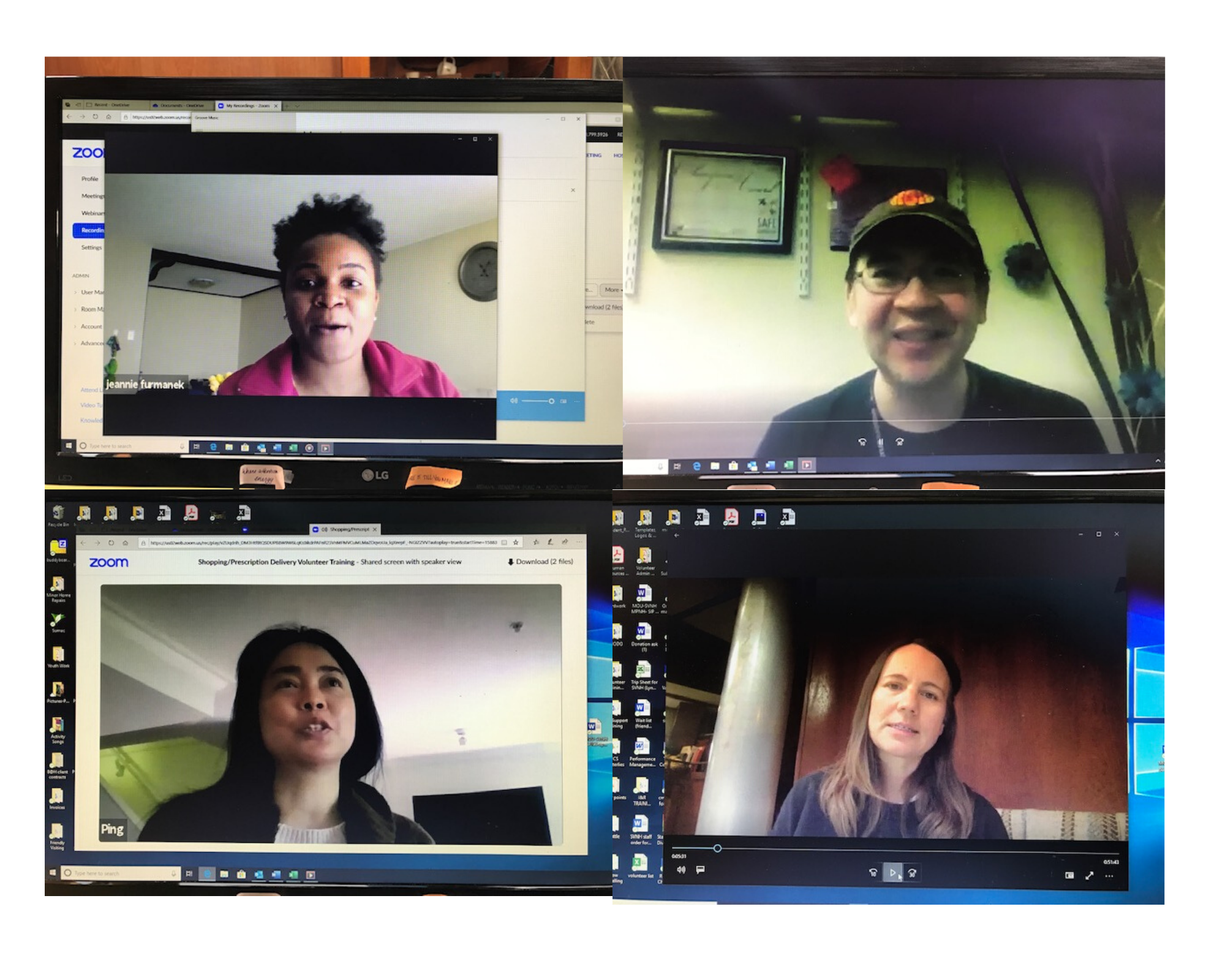
Virtual training simulation. Photo: South Vancouver Neighbourhood House
Pre-COVID volunteer training was in-person at South Vancouver Neighbourhood House, a Better at Home partner agency. Safe Seniors, Strong Communities, an emergency COVID response initiative, which connects seniors with local volunteers who help with picking up essentials and providing friendly check-in calls through bc211 meant the neighbourhood house had to respond quickly resulting in a shift in how training and orientation were delivered.
“The majority of volunteers coming through 211 are completely unaware of our neighbourhood house and Better at Home,” says Jeannie Furmanek, Better at Home coordinator at South Vancouver Neighbourhood house. “This is a great opportunity to connect [with] these generous individuals willing to give their time.”
The one-hour virtual (Zoom) training sessions happen weekly with one session focused on wellness checks and the other on grocery/prescription delivery. A training package is also emailed to volunteers. The response has been positive.
“It is a great way to on-board volunteers who are unable to make it to an in-person training... I also see the wellness checks and social calls [with seniors] continuing after COVID, I just don’t believe they will end once connections have been made. These services can be provided by individuals living anywhere in the city, or country for that matter,” Jeannie says.
Cantonese and Mandarin training sessions are being planned.
Rural grocery delivery
Small town, rural and remote seniors face a unique set of challenges when it comes to COVID, particularly around grocery shopping and payment. With physical distancing measures in place, seniors often aren’t able to get to their bank or are concerned about passing cash back and forth to volunteers.
Safe Seniors, Strong Communities Better at Home agency, Family Dynamix Association in Invermere in the Columbia Valley has implemented Square Readers for touchless payment. The system is connected through a mobile phone app for debit and credit card processing. The best news for use on the Western edge of the Rockies – you don’t need internet. Groceries can be delivered and once the volunteer is back within cell service range, there is a 72-hour processing window.
“The Square reader has significantly reduced the challenge of collecting money for groceries and medication, particularly for those seniors who do not use credit cards or wish to pay by debit.” says Pat Cope, Executive Director at the Association.
“Neighbours helping neighbours, communities working together for all, this is not a new concept, just one with new ideas, creativity and vigour because of COVID-19,” says Kahir.
“Seniors and seniors serving organizations haven’t missed a beat. What we see is very exciting and presents a huge opportunity for using more technology to support seniors independence during this challenging time and beyond.”
Safe Seniors, Strong Communities is a new partnership between United Way’s Better at Home program, United Way supported bc211 and the B.C. Government through the Ministry of Health.

