

June 21 is National Indigenous Peoples Day, a day for all Canadians to recognize and celebrate the unique heritage, diverse cultures and outstanding contributions of First Nations, Inuit and Métis peoples. It is important to acknowledge that while these groups may share similarities, they each have their own distinct heritage, language, cultural practices and spiritual beliefs.

Today is also a day to reflect on our community and to acknowledge our privilege of working, living and playing on the unceded territories of the Coast Salish People. Across the Metro Vancouver region, these include the Hwlitsum. Katzie, Kwantlen, Kwikwetlem, Matsqui, Qayqayt, Semiahmoo, Tsawwassen, Tsleil-Waututh, First Nations, the Squamish Nation and the Musqueam Indian Band.
We each have an important role to play in reconciliation. As stated by Reconciliation Canada:
“Reconciliation begins with oneself and then extends into our families, relationships, workplaces and eventually into our communities.”
Chief Dr. Robert Joseph, Gwawaenuk Elder and founder of Reconciliation Canada, believes we should all carry a Back Pocket Reconciliation Action Plan, so that we can refer to it often.
”Your Back Pocket Reconciliation Action Plan allows you to carry reconciliation with you always. By sharing your Action Plan, you are inspiring others to think about reconciliation and to create their own plans.”
Two years ago, United Way adopted a Statement of Reconciliation, recognizing the work of the Truth and Reconciliation Commission of Canada and committing to learn from its lessons and calls to action. The statement commits to ensuring the needs and aspirations of Indigenous people are fully acknowledged in our work; to continue to build partnerships based on truth, dignity and respect; and to ongoing education in the spirit of reconciliation.

United Way staff at the 2018 Walk for Reconciliation..
As an organization, we understand that reconciliation is an ongoing and evolving journey, dependent on deep listening and purposeful action, learned from and taken in partnership with our Indigenous community partners.
Through consistent dialogue and an openness to learning, we are raising our own organizational awareness and co-developing programs that support Indigenous communities and the reconciliation process.
Over the past year, United Way Avenues of Change (AoC) Guildford West has partnered with the Fraser Regional Aboriginal Friendship Centre Association (FRAFCA) to support its Aboriginal Community Engagement initiative. This has included the development of Little Eaglets Early Learning Program, which is the first Indigenous version of a StrongStart program in the Surrey District.
“Collaboration is an integral piece of the Truth and Reconciliation process,” says Vanessa Hickman, Early Years Manager at FRAFCA. “Our partnership with United Way’s Avenues of Change has increased cross-community communication, specifically between our families, the Surrey School District, our local libraries and neighbourhoods. We have also hired an Indigenous Community Coordinator, allowing us to better connect with community, increase cultural sensitivity and raise awareness of our programs. From the outset, we’ve both understood that working together is key: learning from and trusting each other ensures we can improve and empower the lives of Indigenous people living here in Guildford West, and further afield.”
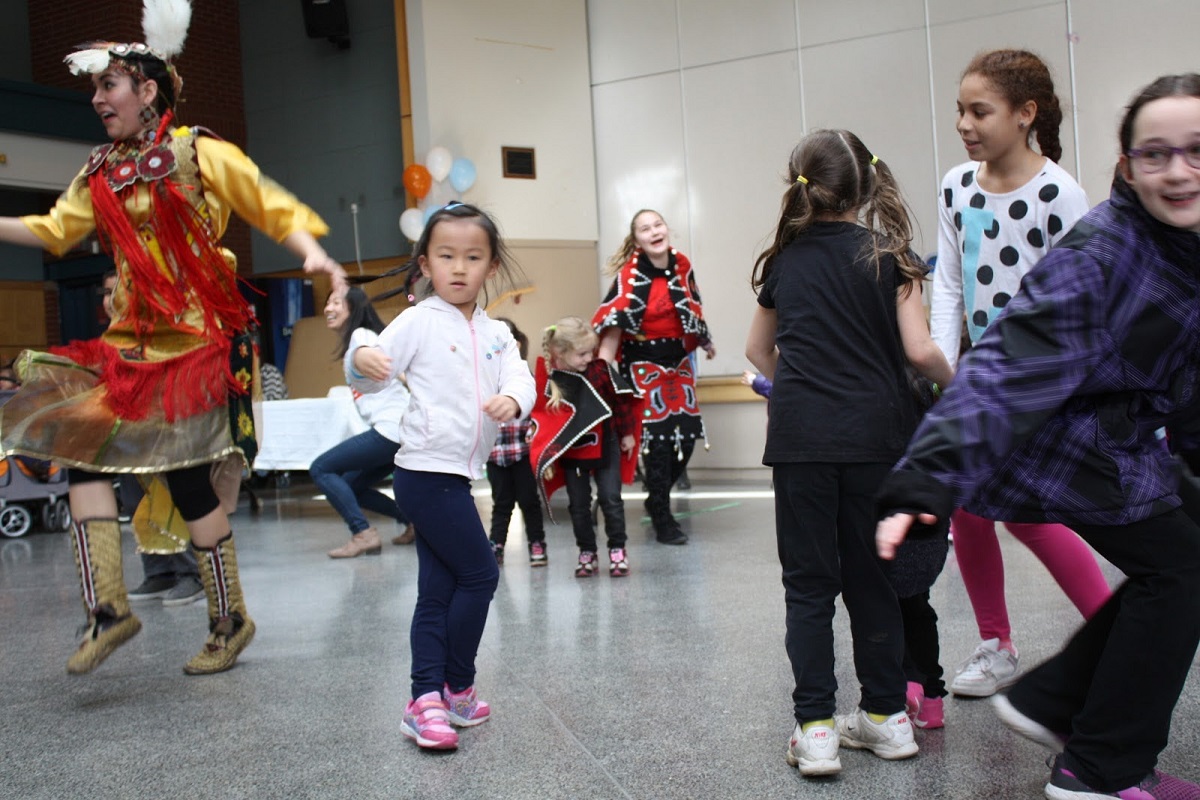
Community dances together at an AoC event in 2017.
A deeply collaborative, place-based initiative, United Way’s AoC focus is on both capacity and equity building, and our organizational accountability to its Truth and Reconciliation commitments.
This also includes providing ongoing cultural awareness training and education to our staff.
“This work is immensely important because our work is entirely focused on the improvement of community – we cannot lose sight of how we define community and the colonial history at the foundation of all of our communities,” says Nichole, Data and Informatics Coordinator for Healthy Aging at United Way.
“Conversation, teaching, challenging, shutting down things that aren’t true… we can all combat ignorance with information – information about the rich history and culture of Indigenous people,” says Jody Olsson, Community Impact Planner with Healthy Aging.
Jody’s paternal grandmother was born on the Rainy River Reserve in Northern Ontario.
“I am a proud Anishinaabe woman who has mostly lived in B.C. as an Urban Indigenous person.”
For her, National Indigenous Peoples Day is a time for celebration and for reflection.
“Today is a day that fills my heart, soul, mind and body. I will reflect on what it means to be Indigenous. I will eat traditional foods, I will hear inspiring discussions and the drums beating – and of course see and meet lots of people I know.”
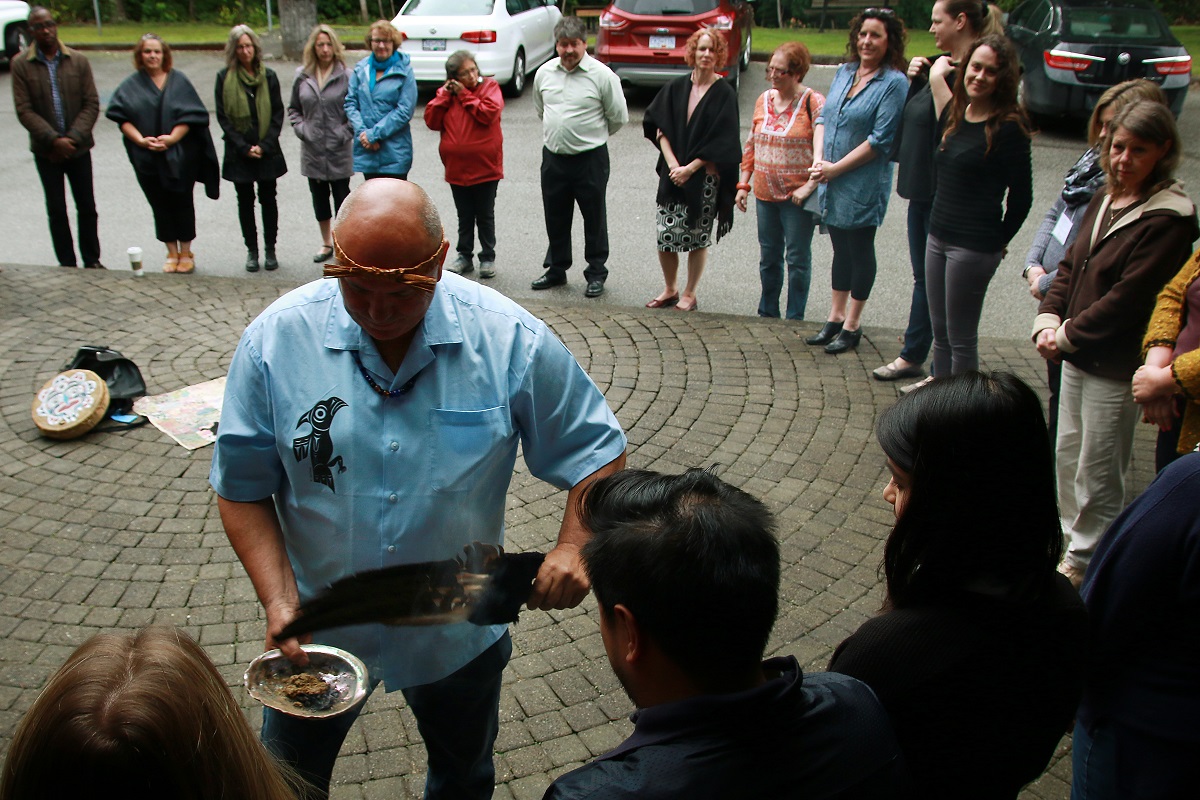
Dan Elliot, Knowledge Keeper from the Stz’uminus First Nation, leads a smudge ceremony at the Better at Home First Nations Gathering in June 2017.
For Nichole, it is a day to acknowledge the resilience and strength of Indigenous peoples.
“Today is an important way to shine a light on the strength of Indigenous culture and how it is all around us – even in our urban environments.”
It’s also about building momentum to ensure this celebration, acknowledgement, conversation and work do not stop tomorrow, or happen only once a year.
“Truth and Reconciliation from my perspective as a settler is an understanding that my work to grow as an ally to Indigenous people will never be complete,” says Nichole. “It means acknowledging my privileges and not being afraid to confront the very difficult truths of past and present oppressions brought upon Indigenous people by the colonial settler system we live within.”
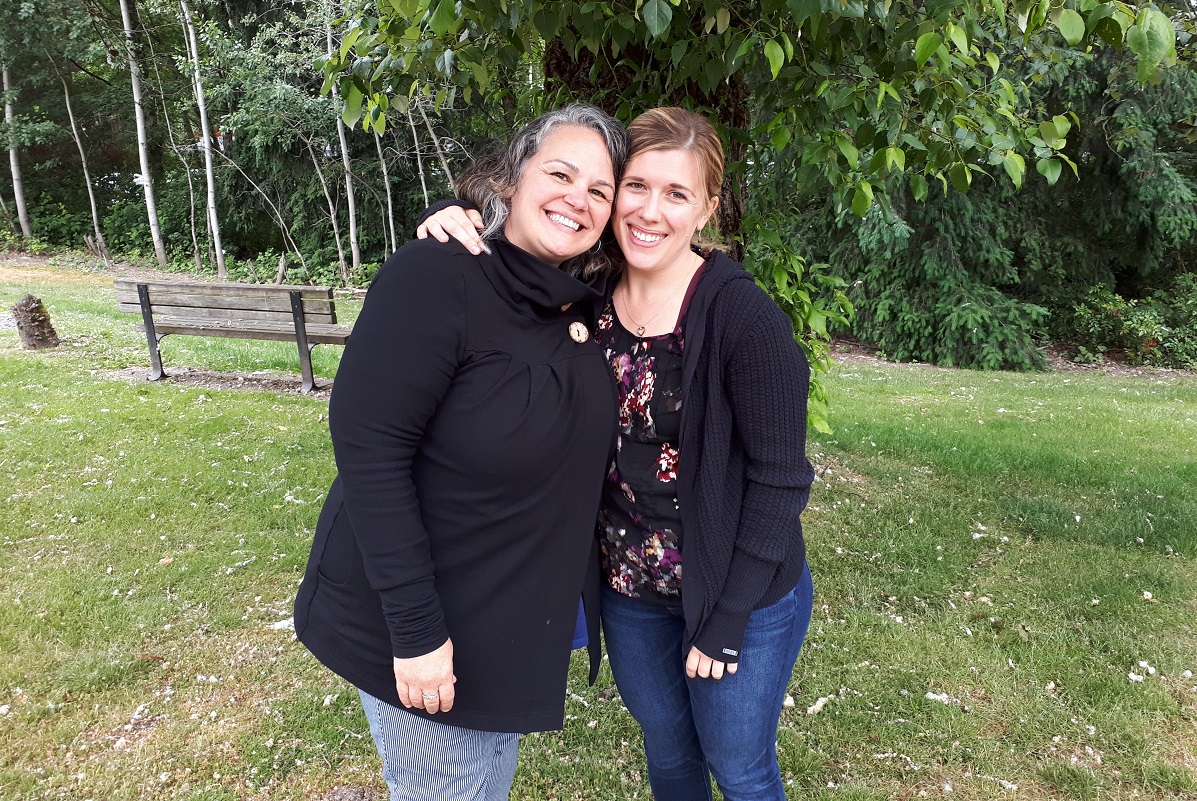
Jody and Nichole.
“It’s wonderful to see people grow and change,” says Jody. “Indigenous perspectives are important and different from the mainstream. We have a lot to learn for our Indigenous neighbours and friends.”
What does Reconciliation look like in your life? Your community?
Let us know on Twitter and Facebook how you are contributing to our national conversation.
Connect with a Reconciliation Dialogue Workshop and download your Back Pocket Reconciliation Action Plan here.
Topics : Building strong communities

