The old adage remains true as ever: sharing is caring. There is no greater example of this than at the Sharing Farm Society, a local non-profit that grows food to feed families in need.
Run by community members, for community members, the Sharing Farm provides fresh, healthy, local produce for the Richmond Food Bank and other meal programs in nearby neighbourhoods.
Through the support of a United Way Active Aging grant, the farm leverages the time and skills of older adults to tackle the issue of community food security. The farm’s vegetables and produce feed up to 2,000 Richmond residents every week.

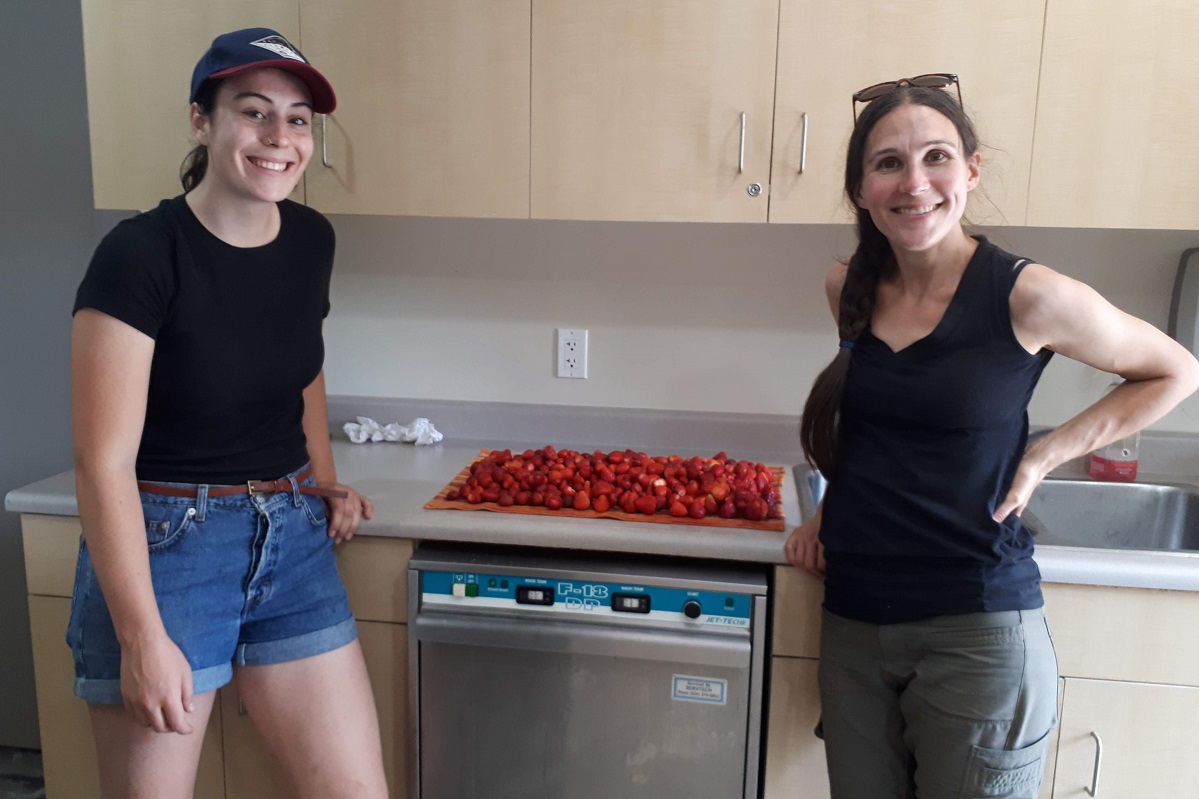
Emma (R) and a fellow staff member Megan (L), in the community garden kitchen
A place for everyone
Emma Point is the Farm’s Volunteer Coordinator. Listening to her speak about the farm, it’s clear how much enjoyment she gets from her job and the passionate group of volunteers she works with every week.

“I get to spend my days with individuals that truly want to be here,” she says. “We work as a team on something that is very important to us – growing food for the food bank. It’s something that is easy to be excited about and easy to be proud of.”

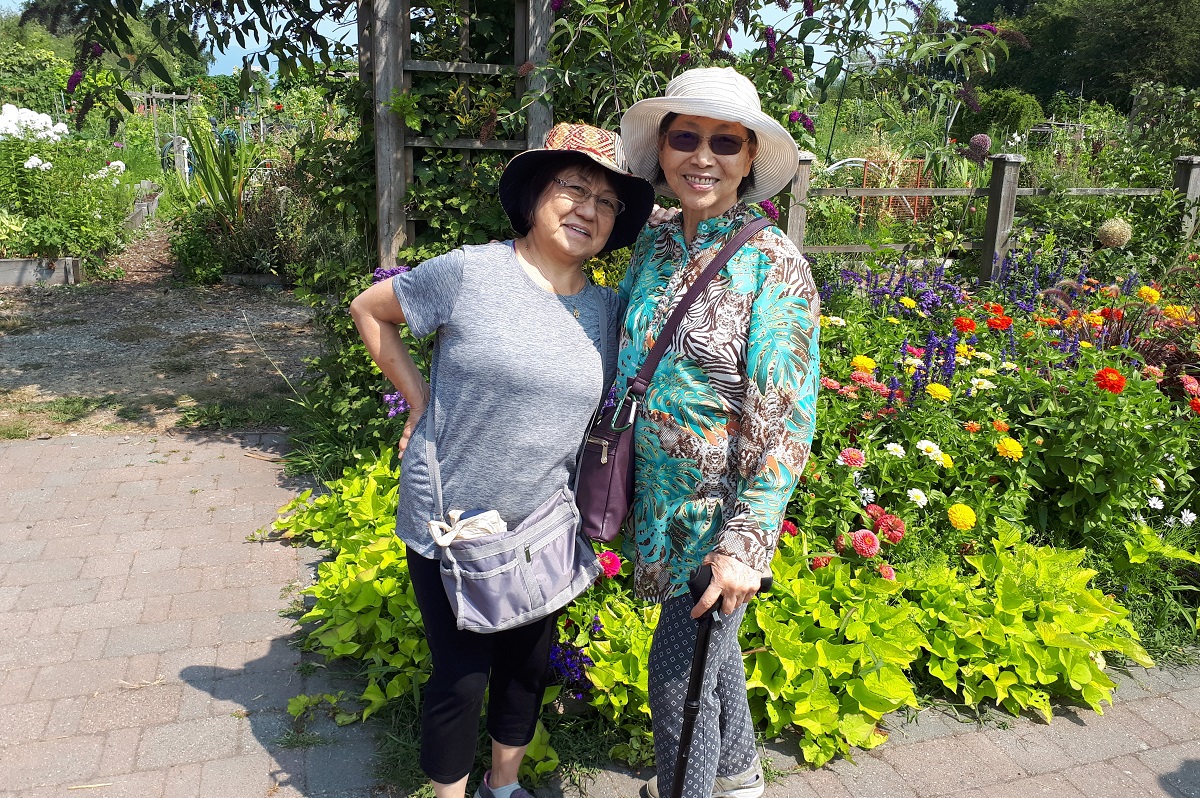
Two Sharing Farm volunteers
While the volunteer program is open to all members of the public, the majority of participants are local seniors who either come to grow their gardening knowledge, or share their green thumb expertise.
“Our program participants are amazing people,” says Emma. “They come from a wide variety of backgrounds, with the largest portion of individuals in retirement years. Some are experts and some arrive not knowing the difference between a carrot and a weed – but that’s why this is a place to come and learn or to share your knowledge with others.”

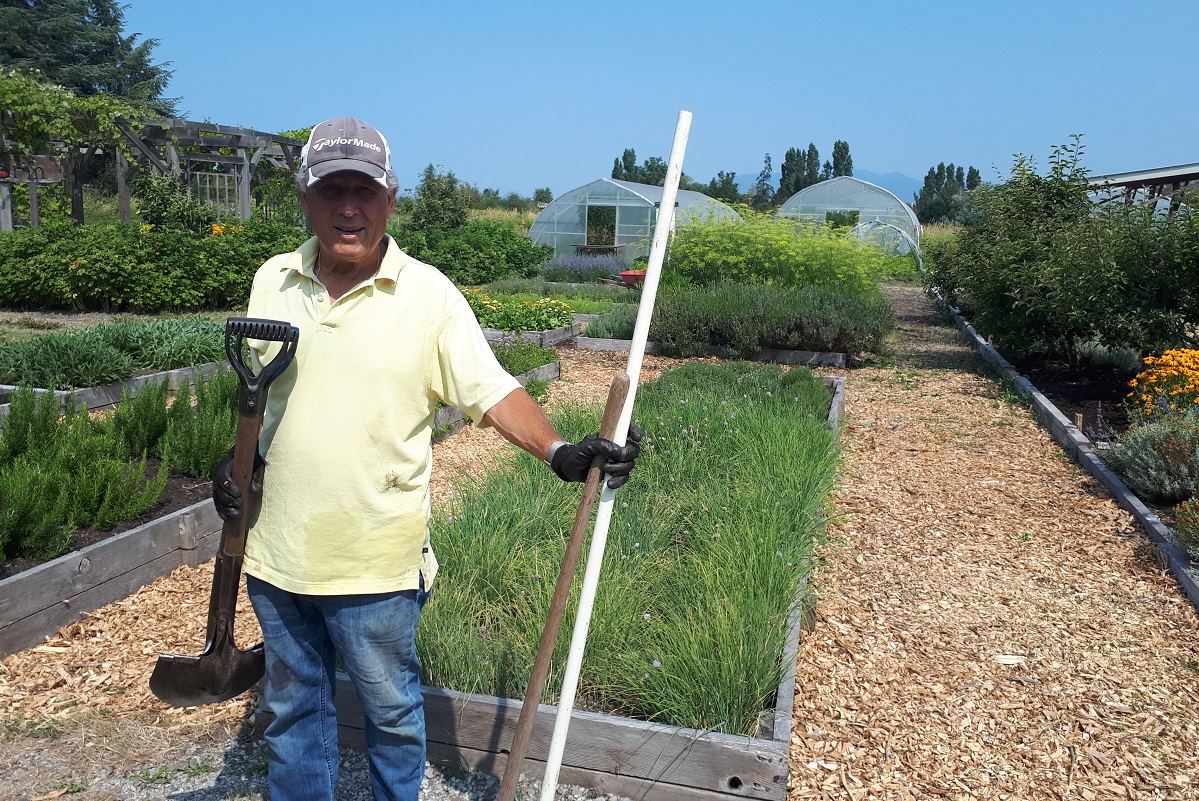
Program volunteer Art with go-to gardening tools
She acknowledges that some participants are dealing with many of the same obstacles affecting other older adults across the country, primarily social isolation. Others lack access to physical activity that is appropriate for their stage of life.
“Our program addresses that,” says Emma. “It provides opportunities for every individual – no matter their ability or age – while still ensuring they are involved in all the stages of growing food.”
This includes seeding, watering, weeding and harvesting.
Finding new friendships
“Oh we do a lot of weeding,” laughs Doris, a volunteer who has been working with the Sharing Farm for the past three seasons. Gardening is a great passion of hers and she loves the opportunity to be outside and to meet new people.

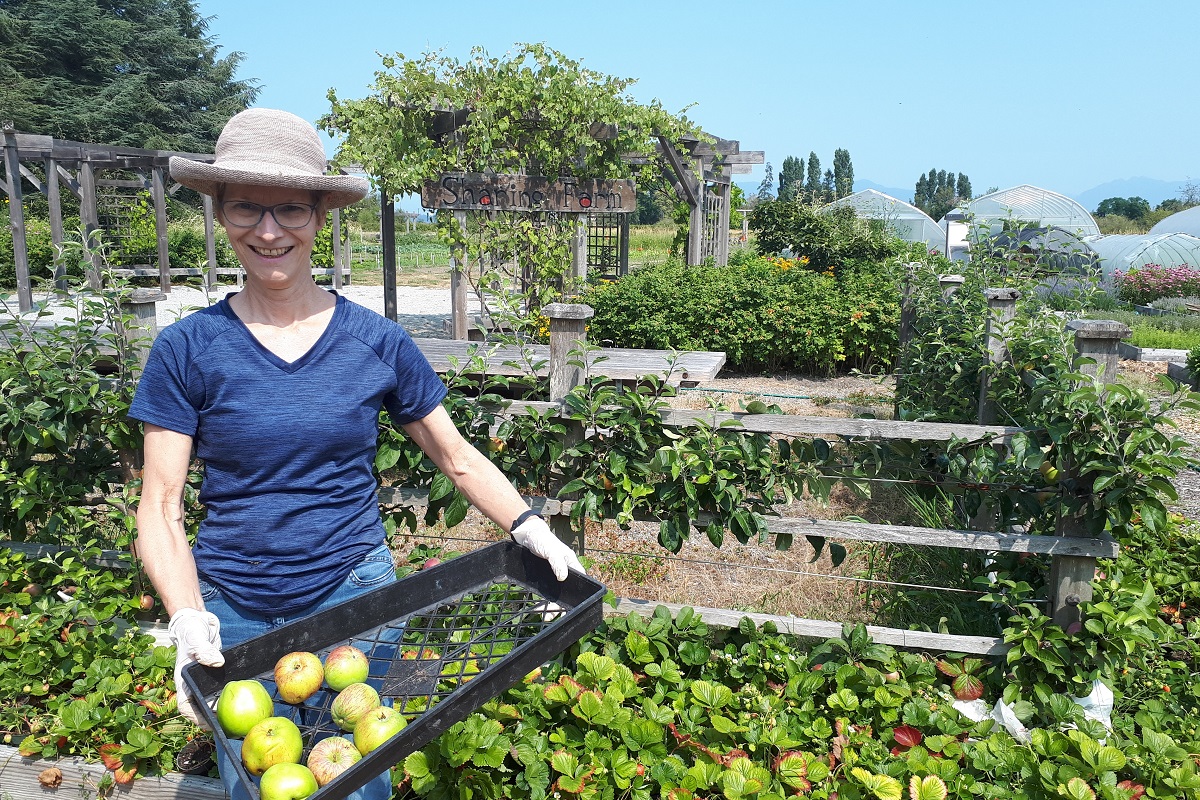
Doris holding freshly picked farm apples
“It’s a chance to get dirty,” she says. “I love coming here, working and learning from others, learning about other cultures and different approaches to farming. We talk about books. We talk about everything really.”
At the end of each workday, she and the group get together and enjoy lunch. The meal regularly includes a salad made from the garden’s greens.
“Just about anything could end up in that salad,” laughs Doris again. “It’s a great time to enjoy good conversation and good food.”
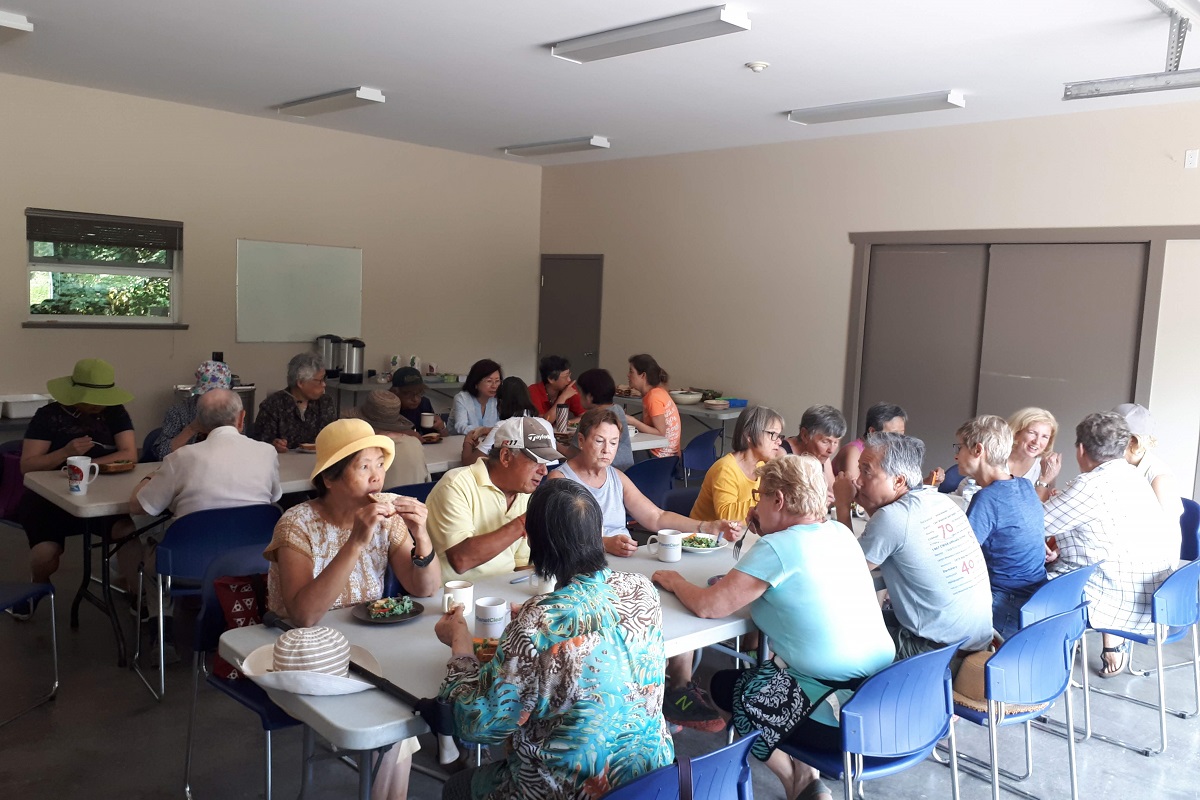
Participants enjoying their post-work lunch and social
The more time she spends at the farm, the more she believes in the importance of the program.
“I had an adjustment period after my retirement,” she says. “After a busy career in health care, I was left with a lot of time and energy. It was helpful for me to find an outlet that aligned with my passion and also gave me an opportunity to learn and give back to my community. It reaffirms my belief that I get so much more by giving back.”
Learning every day
Emma shares that she’s had her own personal transformation during her time working with the farm.
“I learn something new every day,” she says. “I’ve also really come to highly value the social aspect of this program. Sitting down together, eating lunch and talking – you don’t realize it until you’re doing it, but that kind of social contact doesn’t happen all that often. It’s critical to our programs, and I know that others really enjoy it as well.”
She has seen other individuals blossom from their time spent outdoors, meeting fellow participants and learning new skills.

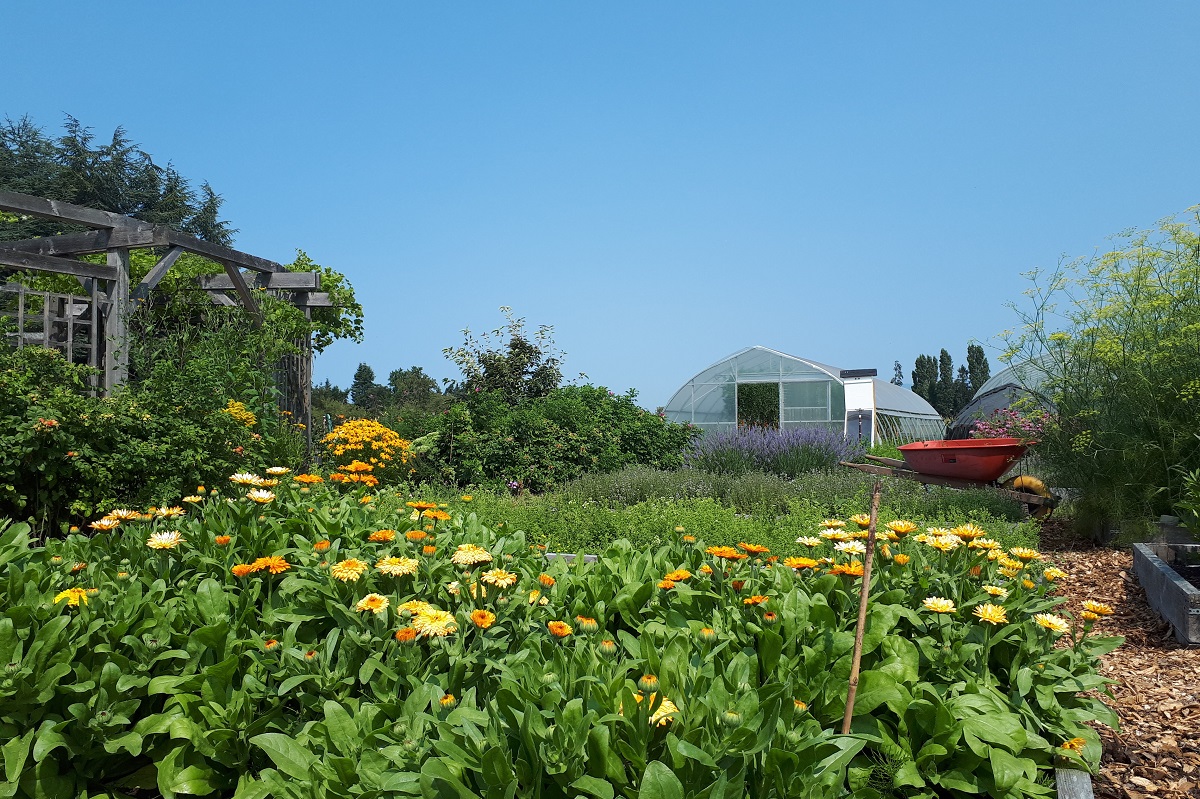
The Sharing Farm.
“There have been instances when an individual will begin volunteering with us and may be shy and not so confident about the work they are doing. After a few weeks or few months, depending on the individual, they are so much more confident, they’ve made friends and they’ve taken on a leadership role in the volunteer team. It’s a wonderful thing to see.”
One of the most compelling parts of this program is that they tackle different social issues, in a connected, purposeful and sustainable fashion.
The Sharing Farm builds community
“I would definitely say this program is unique,” says Emma. “It addresses the needs of aging adults and food equality in our community. This program is sustaining, diverse, and builds community.”
Sustaining, diverse, and a community builder – just like United Way, and the Sharing Farm itself.
United Way and our donors help make this program at the Sharing Farm possible. A donor-powered Active Aging grant provides funding for staff, program administration, food for social snacks, and transportation to the farm for local seniors.
Click here to learn more about the work United Way is doing to create sustainable, healthy, and inclusive communities for older adults across British Columbia.
Since 2015, the Active Aging Research Team (AART) and the United Way British Columbia (UWLM) have been working in partnership to provide community grants that reach diverse communities and that build capacity to promote older adult physical activity, social connectedness, independence – and health.
Seniors’ Week is coming June 1 – 8. And United Way is celebrating BC’s older adults. Look for their stories on Twitter @uwlm and on Facebook @UnitedWayoftheLowerMainland.