

98% of seniors living in Metro Vancouver and the Fraser Valley say their quality of life is “good” or “very good” – if they attend community-based programs. Seniors participating in these activities show a higher level of satisfaction with their quality of life and social interactions than those who do not, a new poll by Insights West conducted in partnership with the United Way British Columbia has found.
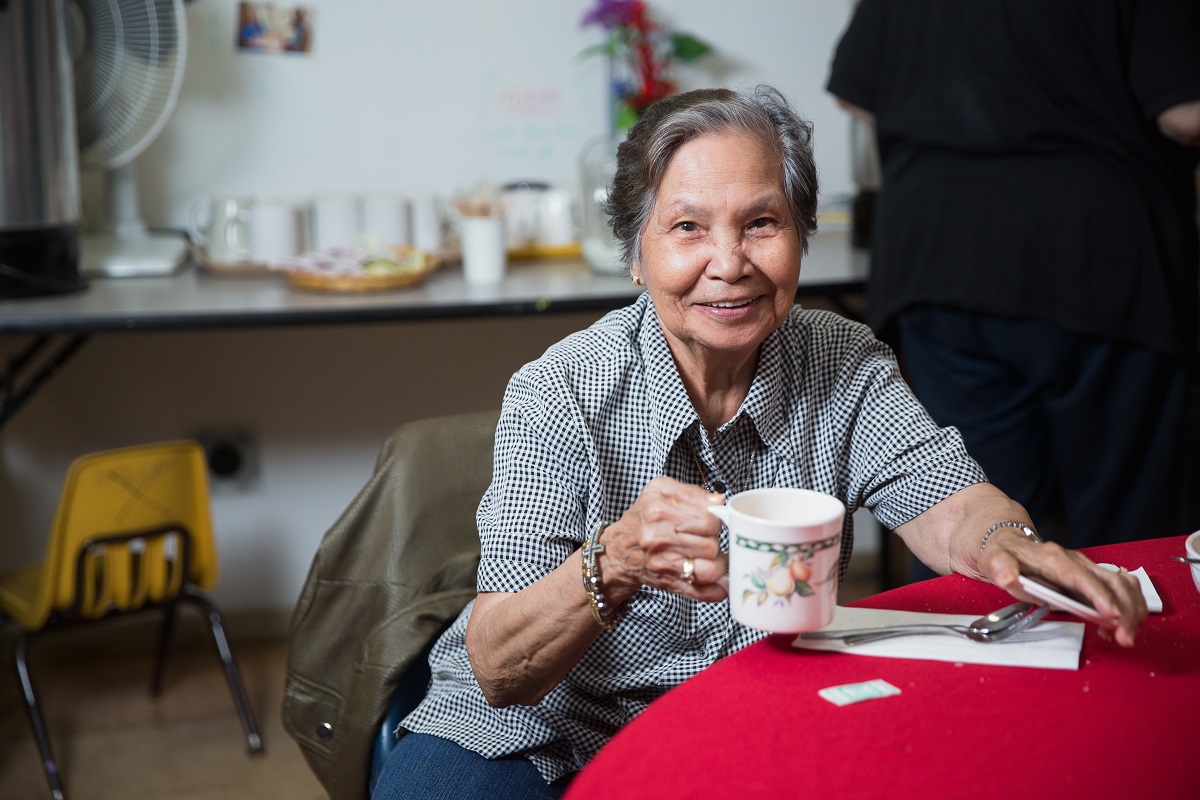
Enjoying tea and company at a seniors’ lunch club.
Across the Lower Mainland, 13% of seniors participate in or attend any community-based programs (such as a walking club or lunch club).
Three-in-five of those who take part in community-based seniors programs (75%) say they receive companionship, while majorities also say they benefit from mental stimulation (69%), connection to the community (63%), exercise (56%) and social support (51%).
The preferred structured activities for seniors in the Lower Mainland are physical (59%), educational (37%), arts-related (27%) and field trips (25%).
The results of this survey are released in advance of the inaugural Provincial Summit on Aging, taking place in Surrey from Nov. 2 to Nov. 3. The Summit is focused on community-based seniors’ services and the vitally important role they play in keeping seniors healthy and connected.
“We know that being connected and socially engaged is one of the most critical factors in healthy aging,” says Kahir Lalji, Provincial Director Healthy Aging, United Way British Columbia. “Yet 25,000* seniors living in the Lower Mainland say they have no one to talk to. That’s why United Way is investing $12 million into seniors’ programs and services this year.”
Seniors aged 65 to 74 in the Lower Mainland also spend more time in structured group activities and informal social activities (15 hours a week) than those aged 55 to 64 (10 hours) and those aged 75 and over (12 hours).
“Seniors aged 65 to 75 are decidedly more in touch with music, arts and drama than any other group,” says Mario Canseco, Vice President, Public Affairs, at Insights West. “They are also more likely to regard travel as a favourite informal activity.”
About the survey: Results are based on an online study conducted from October 22 to October 25, 2017, among 453 British Columbians aged 55+ who reside in Metro Vancouver and the Fraser Valley. The data has been statistically weighted according to Canadian census figures for age, gender and region in British Columbia. The margin of error—which measures sample variability—is +/- 4.8 percentage points, nineteen times out of twenty.
*Vancouver Coastal Health, “My Health, My Community,” 2013/14.

