

Take a moment and ask yourself: what difference have labour unions made in your life?
Safer working conditions, or the five-day work week may be the first things that come to mind.
What you may not know is the far-ranging impact unions have had on policies that shape how inclusive we are as a society. Things like parental leave, protection for victims of domestic violence, and LGBTQSI+ rights, have all been championed from inside the labour movement.
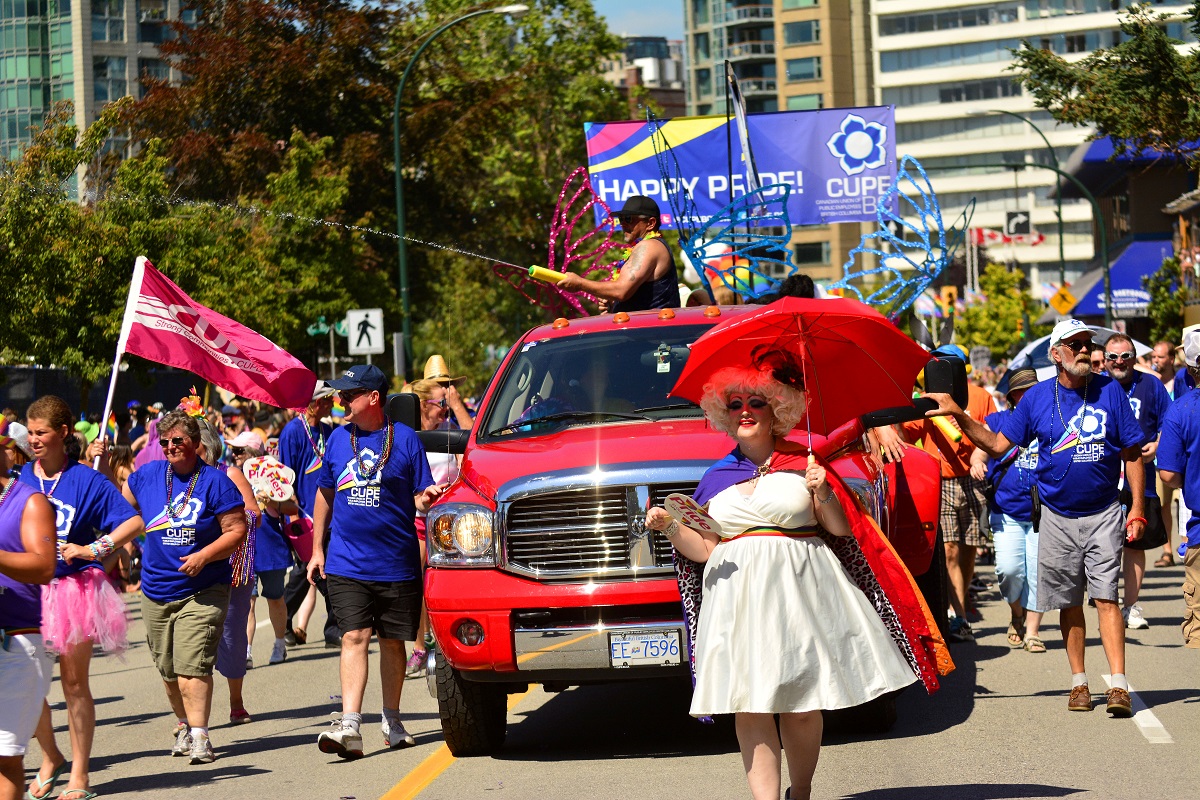
Members of CUPE BC march in the Vancouver Pride Parade
Unions and the labour movement have been, and continue to be, integral to a healthy democracy. Unions advocate for better social, economic and environmental policies. The gains made by unions help form the foundation on which healthy, caring, inclusive communities can prosper.
As matters of inclusion become more and more visible in our everyday lives, so too does leadership from the labour movement.
Labour leadership on inclusion
Across the country, the Canadian Labour Congress (CLC) has a strong commitment to improving working conditions for transgender, non-binary, and gender non-conforming workers across Canada.
Helping drive this work is Adrienne Smith, a Vancouver-based human rights lawyer who also serves as a Pacific Regional Representative with the CLC.
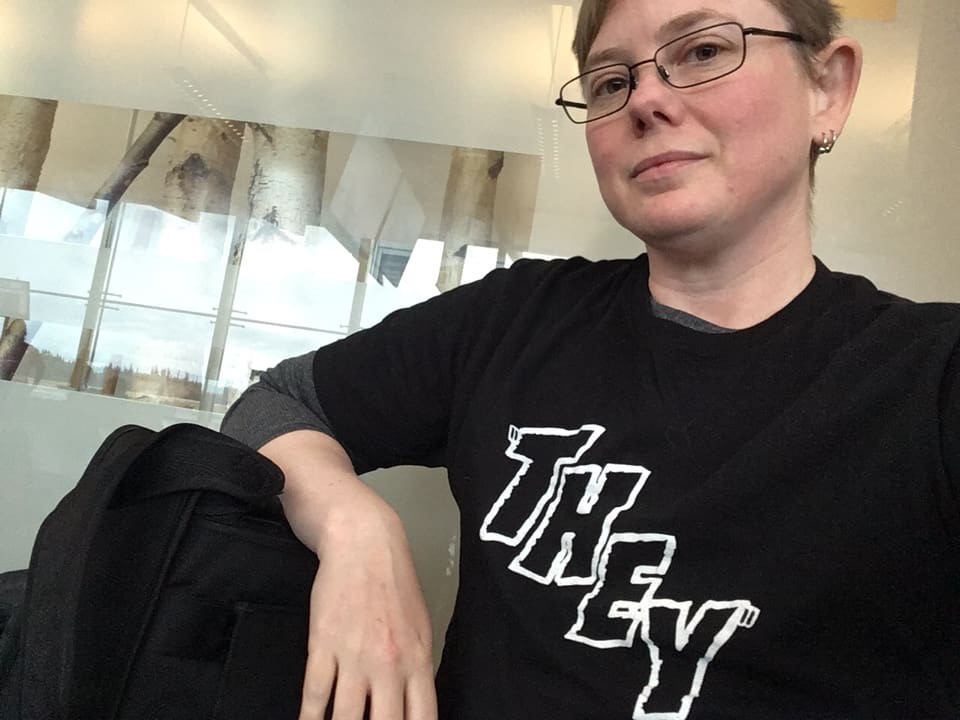
Adrienne Smith is a human rights lawyer and a Pacific Region Representative with the Canadian Labour Congress
“I have been a labour activist since I was first elected steward for the municipal workers’ union [CUPE 23] in 1998,” says Adrienne. “Now, I have the great privilege of educating thousands of workers about the law protecting transgender people, and about simple and easy steps we can take to better include trans people in our workplaces, and in our unions.”
As part of this work, Adrienne shares practical and comprehensive tools and guides that help members at all levels of the labour movement protect the rights of trans union members. These resources can be an important first step in becoming an effective ally.
Inclusion past, present and future
Adrienne knows that this can be a learning curve for many.
“I use non binary pronouns – ‘they’, ‘their’, and ‘them’,” says Adrienne. “This is still a new concept for a lot of people, in the movement as well as outside of it.”
They use past progress to illustrate the impact of, and possibility for, future change.
“Union delegates used to refer to each other as ‘Brother’. My mother and grandmother’s generations worked hard to have women recognized and included, and so now many union members use ‘Sisters and Brothers’.”
Similarly, as the labour movement becomes increasingly educated on trans issues, there has been a growing awareness around including individuals who identify outside of the gender binary in the greeting.
“This has led the CLC and many of its affiliates to instead use ‘Brothers and Sisters and Friends’,” says Adrienne. “It maintains the labour heritage feel of the greeting – while recognizing not all of us identify in a binary way.”
Re-framing language
As part of their training, Adrienne encourages workers to go one step further when it comes to introductions and greetings, including using neutral terms like “delegates”, “participants” and “activists”.
“Recognizing the person – rather than assuming whether that person is a ‘brother’ or a ‘sister’ – is one of the easiest changes we can make,” they say. “Explicitly including folks is extremely meaningful.”
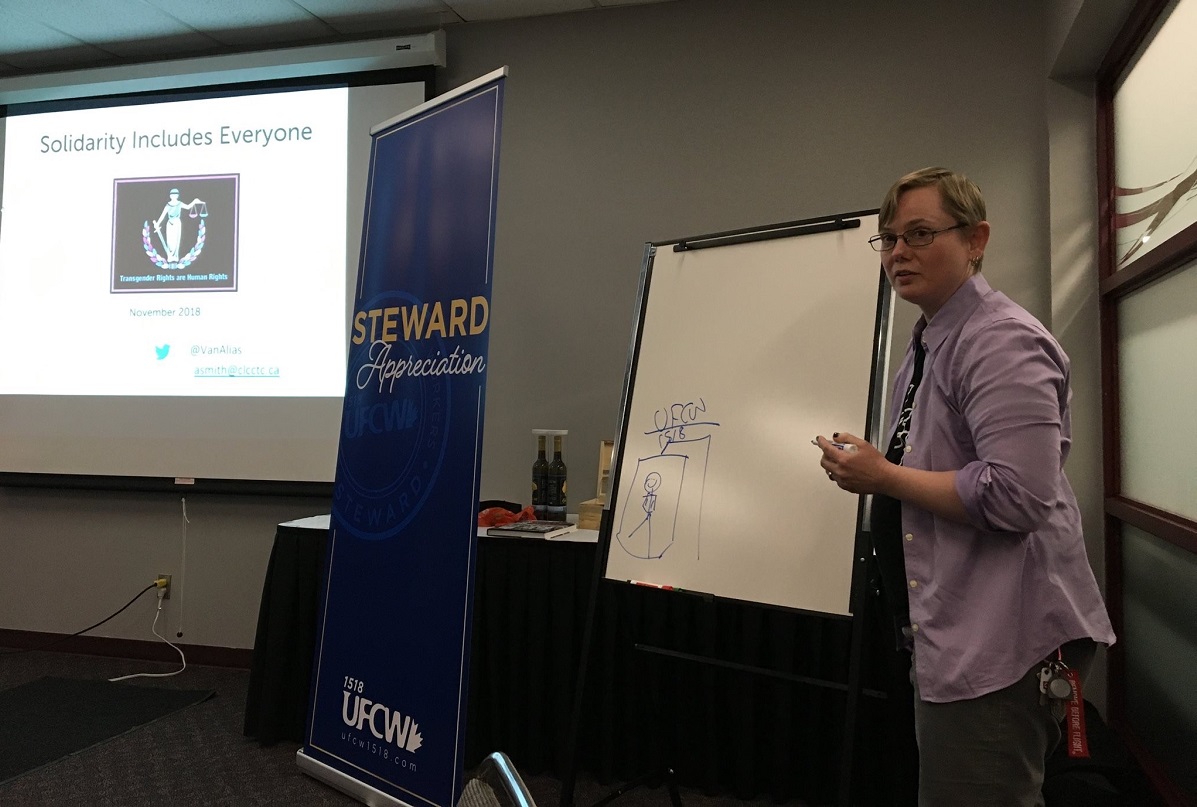
Adrienne teaching “Solidarity Includes Everyone” through the CLC
For Adrienne, the impact of modelling inclusive language and behaviour at all levels of a union cannot be understated.
“When the president of the BC Federation of Labour stands up and models language like this, it is obvious that the core principles of our movement are keeping step with the world.”
Learning with United Way and the CLC
Every year at a training program called Winter School, United Way and the CLC jointly offer three courses focused on how unions can drive social change. These include understanding and promoting trans rights, through labour community advocacy.
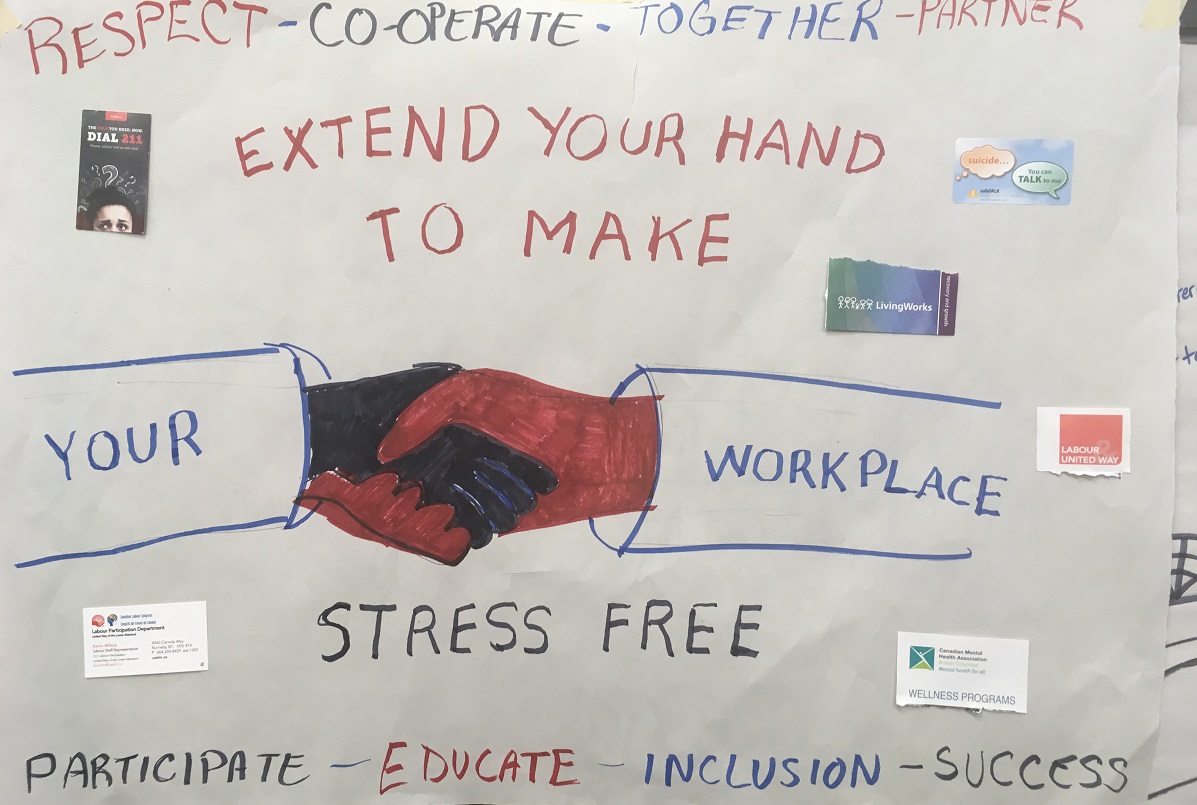
A poster from the Labour Community Advocacy course, jointly offered by the CLC and United Way
As a facilitator of this course, Adrienne sees that despite many participants being new to the labour movement, many are eager to support this cause – both inside and outside of their workplace.
Adrienne also believe it’s important to re-frame what we think of as “learning.”
“Formal education is often framed as a way to improve the individual, not the community,” they say. “I appreciate Winter School’s departure from this view,” since Winter School shows learning can be collective, communal and system-wide.
Looking ahead
Adrienne acknowledges that with great strides taken, there is still much work to be done.
“When I hear about the difficult time trans people have facing employment discrimination – that makes me furious and sad. But these things are happening less and less in unionized environments, and I’m very grateful for that.”
When asked about the future of their role, they turn to a well-known maxim:
“With great power comes great responsibility,” they say. “This is true for labour. We have tremendous power to set rules of engagement and workplace norms. At the moment, work against harassment and discrimination is an area where unions are making great gains.
“I’m glad to be a part of this important work,” they say.
And so are we.
Transgender rights are human rights. Use this short guide by Adrienne and Our Time Magazine, to grow as an ally.
Topics : Building strong communities, Labour

