

“What do we have, if we don’t have a connection? We have only ourselves,” says Marlene, a Seniors Community Connector, who helps other seniors access life-changing programming in her East Vancouver neighbourhood.
She believes that everyone, no matter their age, should be connected to local home care and transportation services, as well as community-building activities, like language, cooking and exercise classes.
Recent data from the Social Connection and Health report, produced in partnership by Vancouver Coastal Health, Fraser Health and UBC’s Faculty of Medicine, shows she’s right. Community connections and inclusivity are integral to our physical and mental well-being.
A place to belong
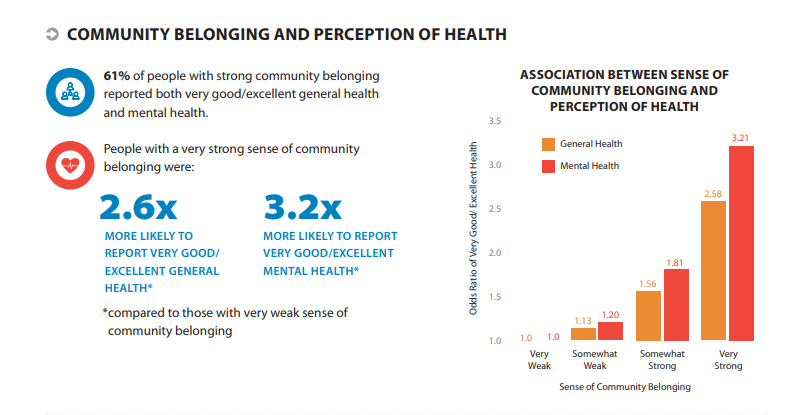
According to the report, 61 per cent of respondents from across the province who say they have strong community belonging also reported very good or excellent general health and mental health.
Source: http://www.myhealthmycommunity.org/Portals/0/Documents/Reports/MHMC_SocialConnections_web.pdf
It can be as simple as having someone to talk to.
Think of it this way: when we have a safe, consistent and empathetic support network, we are better able to cope with, and manage our stress and anxiety.
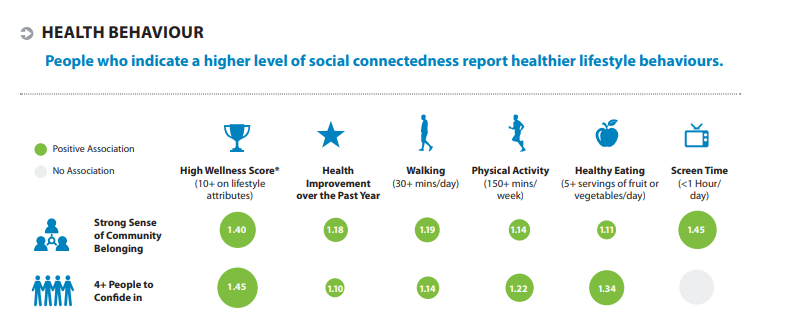
Effective stress management then leads to greater engagement in, and encouragement of healthy behaviors – in both ourselves and others – including physical activity, healthy eating and regular check-ups with healthcare professionals.
The report shows strong links between community belonging and an individual’s perception of health.
Source: http://www.myhealthmycommunity.org/Portals/0/Documents/Reports/MHMC_SocialConnections_web.pdf
However, it is concerning to see that 43 per cent of Lower Mainland residents reported low or very low sense of community belonging.
So how do we reverse this trend? What steps can we take to increase social connectedness in the neighbourhoods we call home?
Giving back and taking part
The report cites volunteerism, physical activity and access to community facilities as important influences in counteracting this trend.
Jackie, a Mission resident who attends a United Way Seniors Active Aging program at Mission Community Services, is proof of how these factors impact our quality of life.
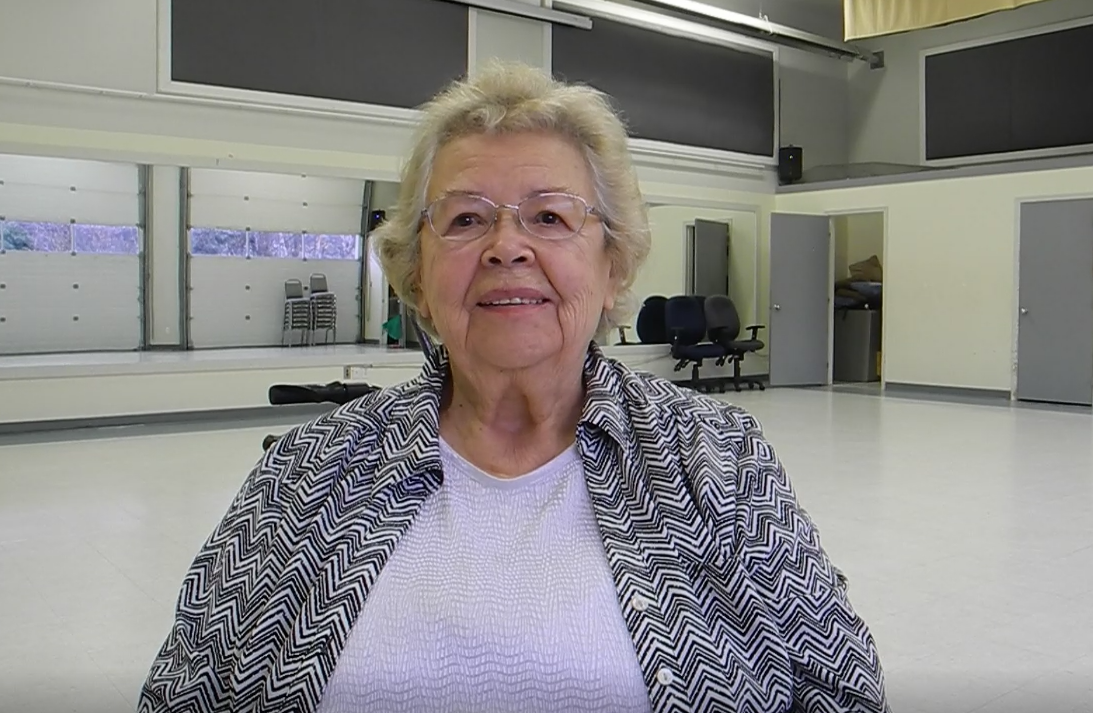
Jackie at a chair aerobics class at Mission Community Services
“I actually helped start the program! Now I volunteer here four days a week,” says Jackie.
Helping with, and taking part in the program’s classes make her feel good – physically, mentally and emotionally – and is something she looks forward to every time.
“After about a day, if I stay home and don’t do much of anything, I just start to feel stiff and sore. I like being out and doing things.”
Like Marlene, she takes the time to tell new individuals she meets in her community about the program and the different resources available at Mission Community Services. She’s happy that many have come out and continue to enjoy the classes.
“These are the things that keep me mobile. They strengthen me and my body. They keep me moving, and that’s all I want!”
A role for everyone
Like Jackie and Marlene, we can all take action to help build social connectedness. Take some time to ask yourself:
- Where do you love giving back?
- Who can you reach out to for support? Who can you support if they need it?
- In what different ways can we show our community how much we love to call it home?
Let us know on Twitter and Facebook how you connect with you community.
We believe that everyone has the power to positively impact our communities. Show your local love today.
Since 2015, the Active Aging Research Team (AART) and the United Way British Columbia (UWLM) have been working in partnership to provide community grants that reach diverse communities and that build capacity to promote older adult physical activity, social connectedness, independence – and health.
Topics : Building strong communities, Local love, Seniors

